
Libumba & ALMA
Hwinzo is surrounded by the work of two initiatives that were growing at the same time the retreat property was being built. To understand Hwinzo fully, you need to understand both
Libumba — clay in Gitonga
For more than a thousand years, the floodplain of the Mutamba River in Inhambane Province has supported a living pottery tradition. Generations of women have carried this knowledge forward: gathering clay by hand, shaping each vessel without a wheel, and firing their work in open kilns. Today, that tradition is increasingly at risk.
Libumba was created in 2018 to help protect and renew this heritage. The brand refines and transforms traditional Mutamba pottery for a contemporary audience while preserving its deep connection to place, material, and maker. Every piece is shaped by master potters in Mutamba, then finished at the Libumba workshop, where each glaze is mixed and applied by hand.
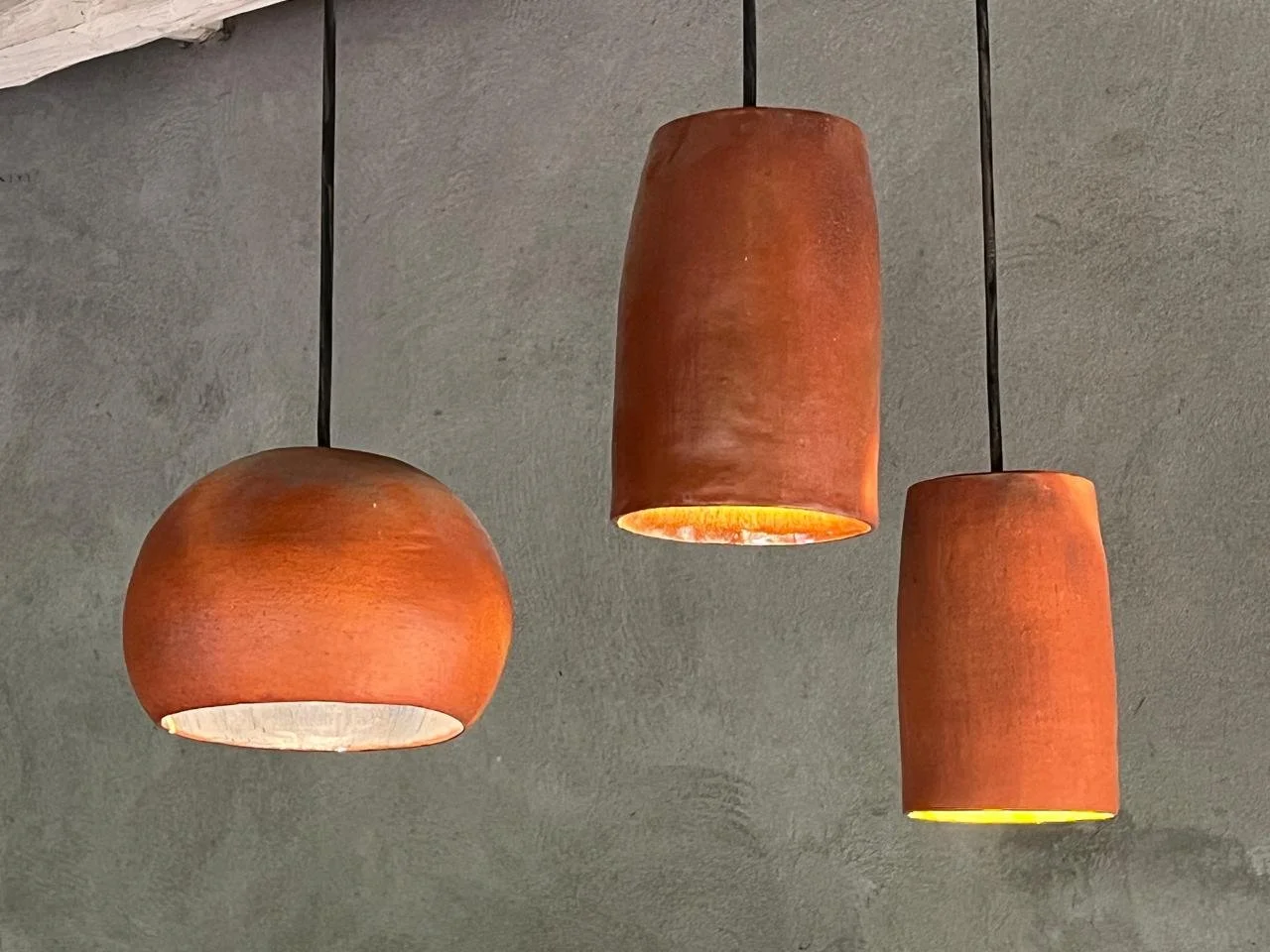
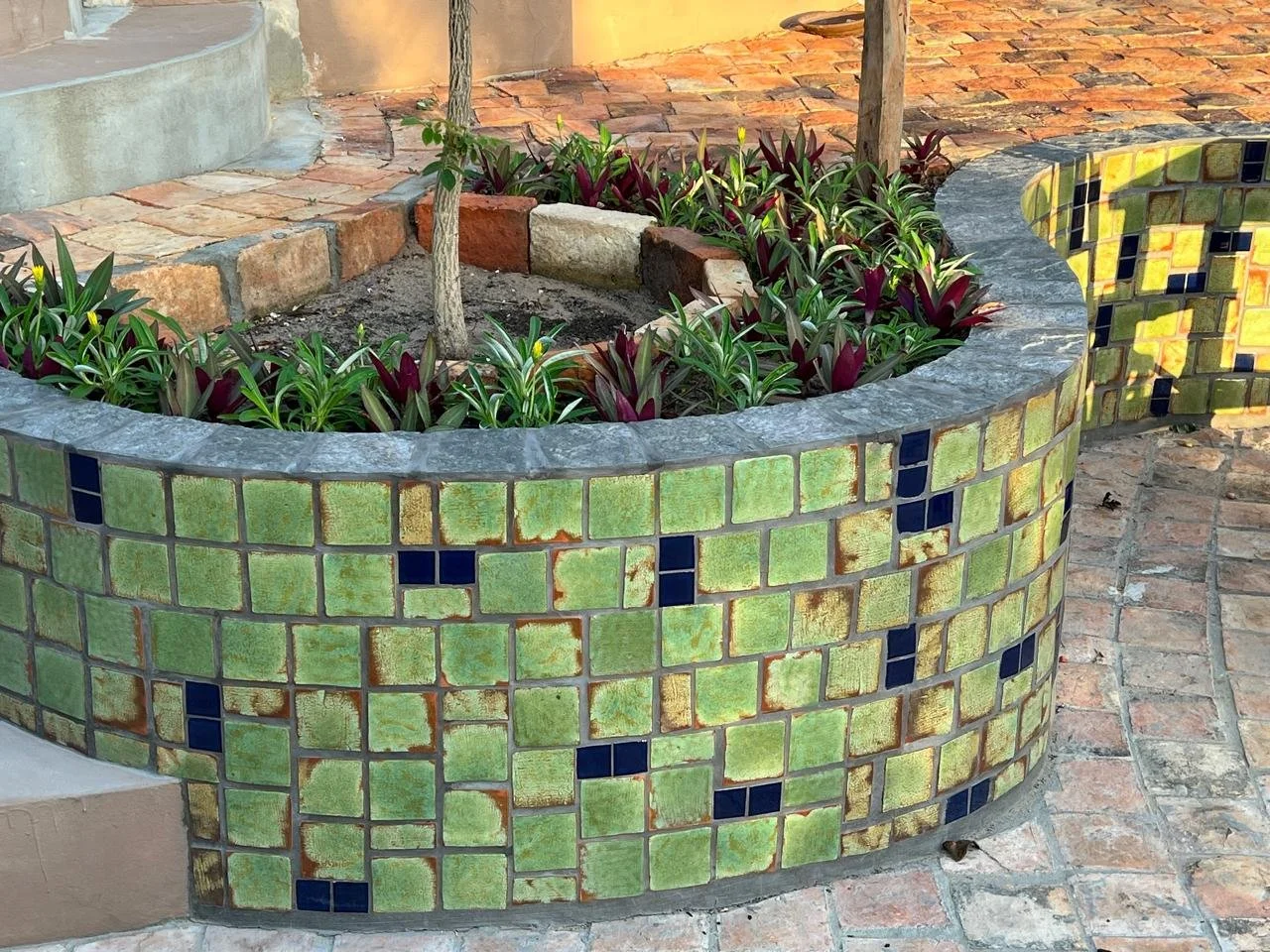
At Hwinzo, Libumba is woven into the architecture of everyday life. The tiles around the pool are Libumba. The lamps hanging in each room are Libumba. The plates on the table are Libumba. This is not a symbolic partnership or a marketing story — it is a physical connection, built into the spaces people touch, use, and remember.
ALMA Tofo Associação de Limpeza e Meio Ambiente
ALMA is a collaborative environmental initiative working at the intersection of waste management, plastic innovation, and coastal stewardship in Tofo.
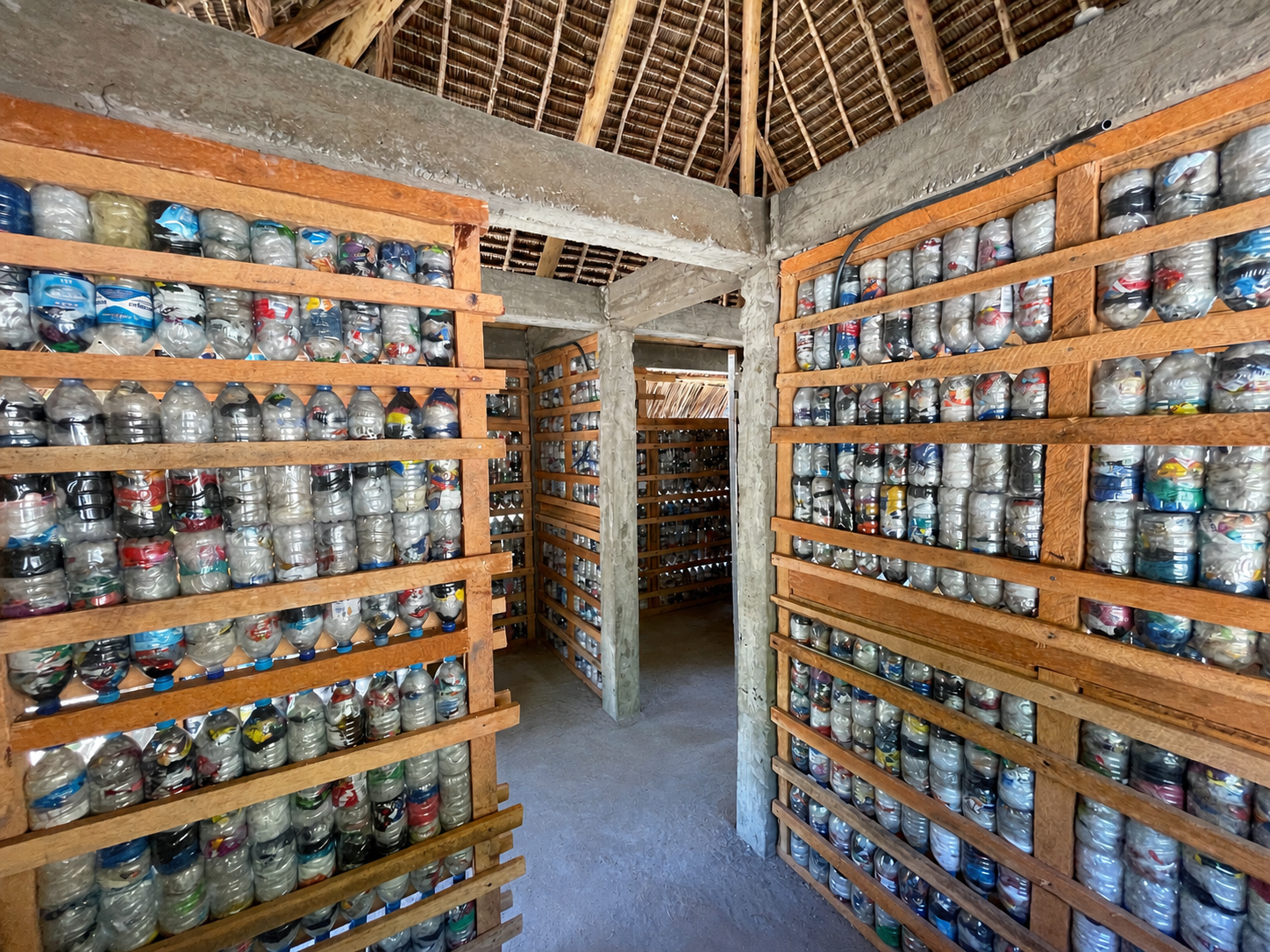
Its collaboration with Hwinzo has already produced one of the clearest demonstrations of what is possible when local waste is treated as a resource. The walls of Hwinzo’s main bedroom were built using a technique developed with ALMA: 4,000 plastic bottles and approximately 150,000 plastic bags were used as insulating wall fill between structural elements. More than 3 tonnes of plastic was repurposed across Hwinzo.
The result is both practical and symbolic. The bedroom stays cooler in the wet season and warmer at night. Plastic that once moved through Tofo’s waste stream is now locked into the building itself, serving a purpose rather than polluting the landscape.
This is what separates ALMA from a cleanup operation alone. It is also an innovation program. The bedroom is not a concept drawing or a small experiment; it is a full-scale proof of concept, built, used, and lived in.
Our Environmental Commitment
Solar power throughout the property.
Drinkable borehole water.
No single-use plastics.
Refillable water stations and bathroom products.
Low-energy lighting and passive cooling systems.
Hundreds of native coastal plants restored across the property.
Protection of existing dune forest and sensitive coastal habitat.
Composting and organic waste reduction.
Waste separation and recycling points.
ALMA plastic-bottle insulation using 3 tonnes of repurposed plastic.
Locally made Libumba tiles, lamps, and tableware.
Use of local makers, artisans, and natural materials.
Walking paths designed to protect the dunes and forest.
Makers space in development for craft, repair, and material innovation.